Collared & Cuffed
16 Apr 2026 – 16 May 2026
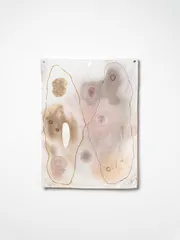
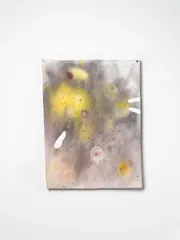
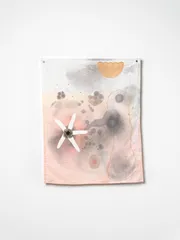
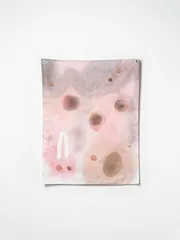
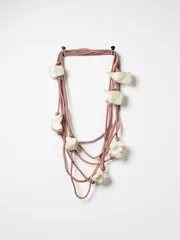
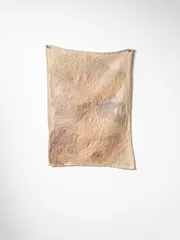
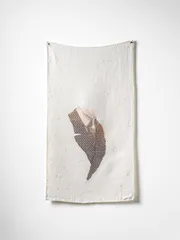
These artworks dwell in entangled lineages from the 1930s. Specifically, they respond to translated German family letters written in the lead up to and aftermath of World War II, between my great grandparents and their children (two in Australia, and one in an English prisoner of war camp). As a descendant living in differently alarming times, grappling with how my ancestors reckoned, survived, acted and witnessed, propels this body of work. They negotiated Nazi Germany in myriad ways; exiling themselves, finding solace in labour, aiding where possible, documenting the missing, or being so horrified by realities they questionably wrote ‘it’s best not to speak about it’. These artworks dwell in the still lingering shadows of these atrocious actions, silences and behaviours that haunt across time, and question the patterns passed from generation to generation, across continents.
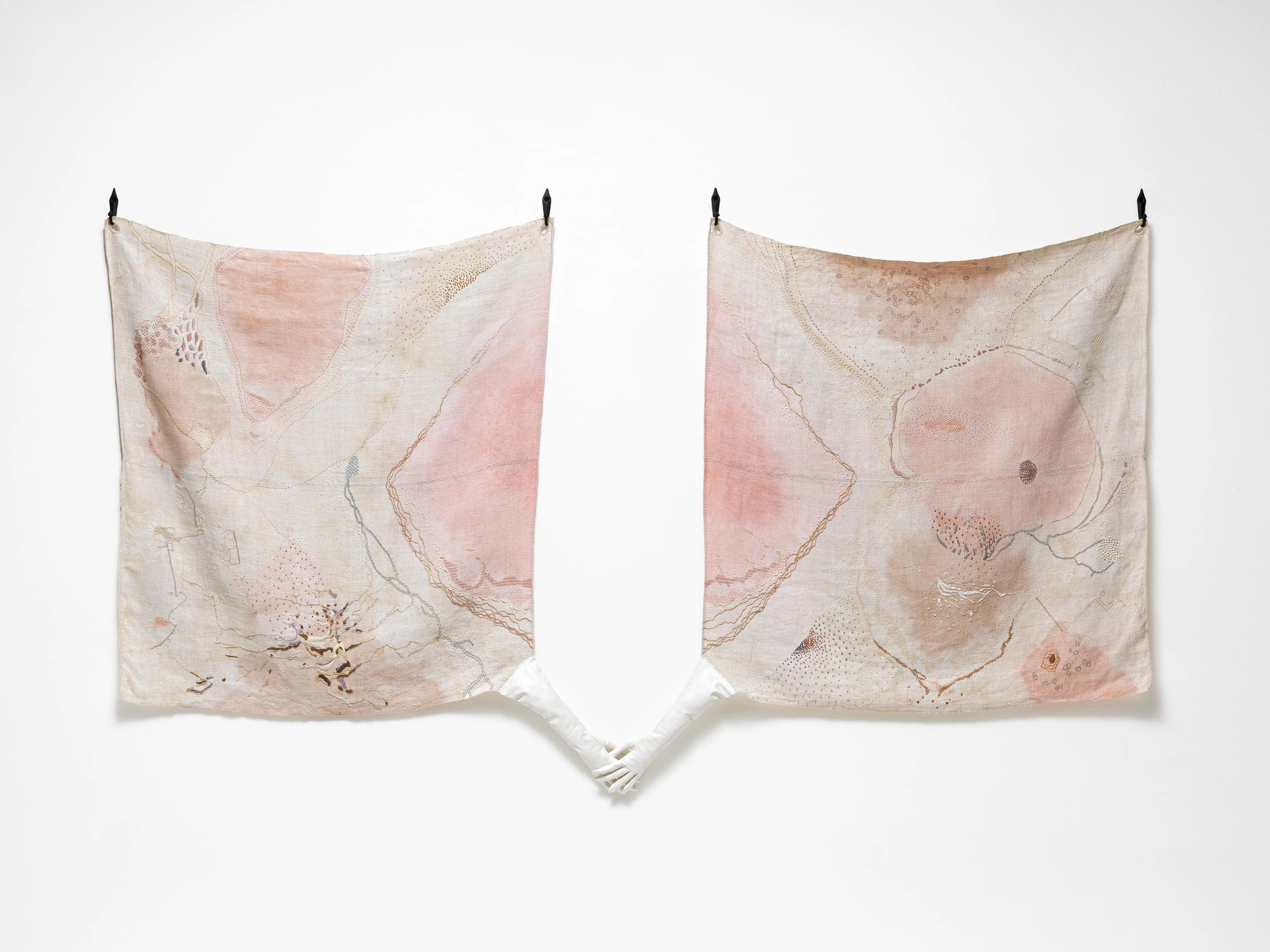
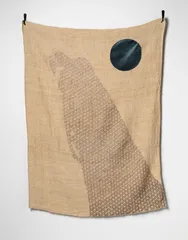
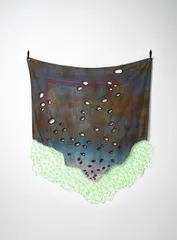
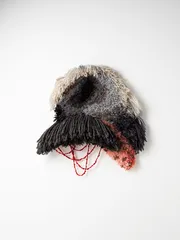
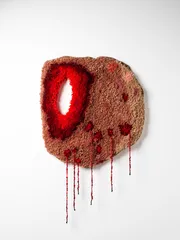
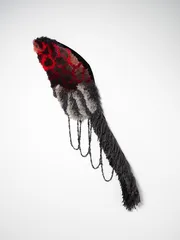
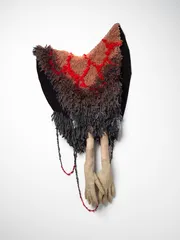
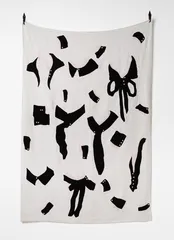
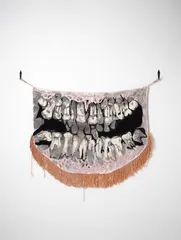
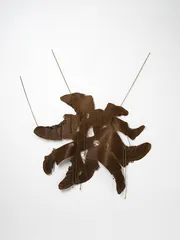
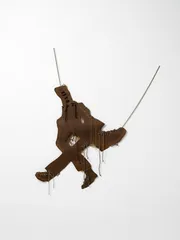
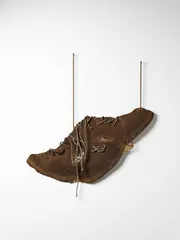
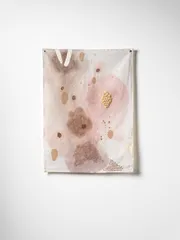
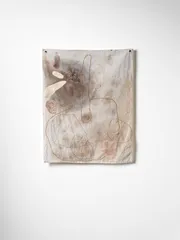
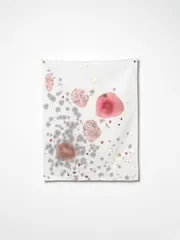
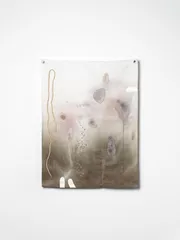
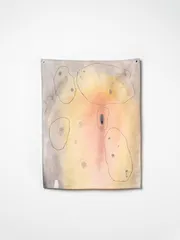
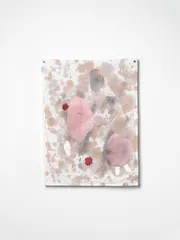
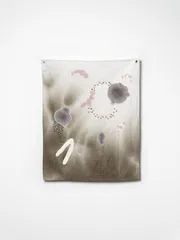
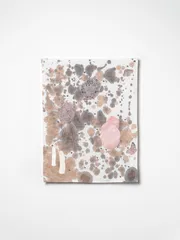
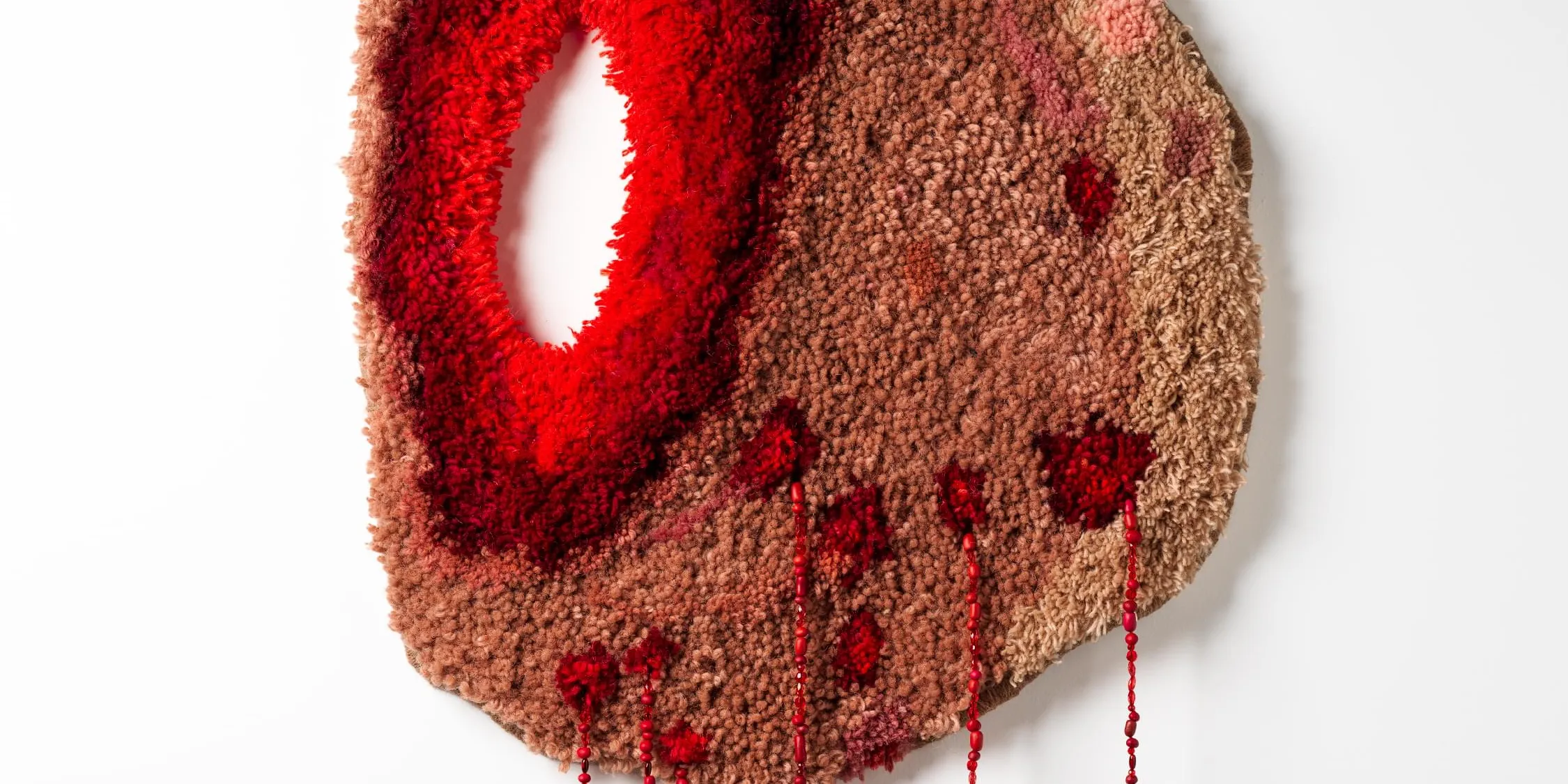
To be collared and cuffed infers dressing finely, tidily and smartly, as well as being restricted and controlled by conventions, or worse, by those wielding power. Collars and cuffs are also textile sites where bodies emerge, and grime and stains congregate, revealing the messy human goings on under neatened outward appearances. Across my artworks, grime, stains and shadows spread, made from substances, repetitive patterns and collage (a destructive process of severing and cutting, followed by fragmented reconstructing). Hand-stitches and intimate techniques take over repurposed textiles, and range from blackwork embroidery, sampling, latch-hook rugmaking, applique, and fabric staining. They conjure bodily substances and stuffs, as well as repeating symbols such as messenger birds, crowded teeth, buried boots, buttoned up collars, and clawing hands. Such hands, I imagine, are from my mother’s long lineage, continuing to reach out. It was and still is the women of my family who find hope in connectedness and communication, especially caring for centuries of family stories.
My artworks are made from labouring, working, fretting, and expelling energies that come up incredibly short against the suffering of others and ecologies. I’ve learned that in my family this is a multi-generational tactic to reckon with all that happens. In my times, deliberate hand-making draws upon this matrilineal activist tactic to rally against Capitalist greed and power which has always caused damage upon bodies of all kinds. Each of these works, informed by a feminist understanding of textile practices, has documentation as its impetus; documenting what is happening, what happened, and valuing how archival records (like the family letters) have been cared for for future generations to learn from. I continue my ancestor’s acknowledgement of the importance of keeping records to tell from the inside, from the perspective of ordinary lives. These archives, now in my hands, contain ghosts of what was unspeakable, conjured in roundabout ways. The overall message which emerges keenly from the letters is that when decencies and justices are disregarded it remains important to tell, list, unbury and resist.
Thank you to the shoelace donators (Laura, Suzie, Jade, Ines), to Mel Young for her timely thread delivery to Bundanon where some works were realised and creativity reignited, and Andrea Sainsbury for a generous bag of wool, many used here. An immense thanks to Deidre But-Husaim for her edging aid and support of every kind, as well as numerous and uniquely special friends, family and supportive souls who I am indebted to for their ongoing kindness and acts of care. And thank you CreateSA for the generous fellowship which ensures 2026 and beyond are years of research and growth, otherwise unattainable.